Check These are The Best Links from Google
Showing posts with label NYSE. Show all posts

Tuesday, August 25, 2009

Ben Bernanke


For an academic from Dillon, S.C., Ben Bernanke is an unlikely gunslinger.
In nominating the Federal Reserve chairman to a second term, President Obama on Tuesday compared Bernanke's efforts to avert a second Great Depression to FDR's "bold, persistent experimentation" to get the country out of the first one.

But Bernanke's efforts weren't easy -- or without critics.

The Fed has taken on unprecedented risk: It took on a trillion dollars of troubled assets, slashed interest rates, bailed out financial industry titans and launched more than a dozen expensive lending programs.

Bernanke is sure to face a lively confirmation debate in the Senate before his first term is up in January of next year.
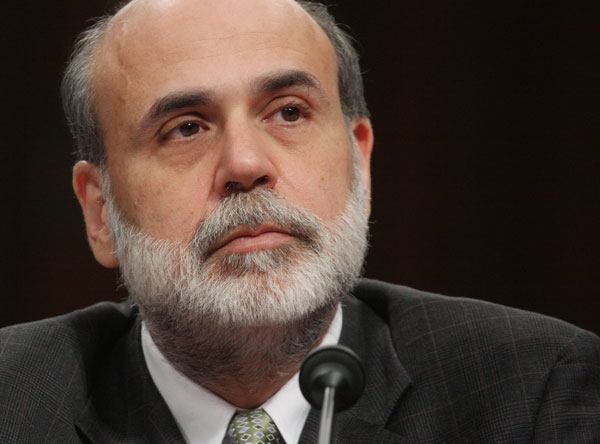
"The problem with all of the risk is that it has created an unhappiness with Congress," said Lyle Gramley, a former Fed governor. "It's going to create problems for Bernanke in his confirmation, but these things had to be done to prevent an absolute meltdown in the economy."
Exit strategy: Walking the tightrope

In part because of the Fed's aggressive efforts, there are some signs that the economy -- in free-fall late last year -- has stabilized. Gross domestic product is not falling as steeply. Neither are job losses. On Tuesday,home prices posted their first gain in three years from weak levels earlier in the year. U.S. stocks are rallying, up more than 50% in 5 months.

But all of the Fed's moves come at a cost: potential inflation down the road if the central bank is unable to rein back in the money it has pumped into the system.

Bernanke has acknowledged that concern, saying that the Fed will wind down the programs as the economy enters a recovery phase and will begin to raise interest rates.
"The fact that he had to take on a lot of risk and we have these huge debt loads shouldn't be a complete surprise -- after all, this is the Great Recession, the worst downturn we've seen since the Great Depression," said Lakshman Achuthan managing director Economic Cycle Research Institute.
"It's not about how much, it's about when they exit from this: If they leave too early, we get deep deflation, and we get spiraling inflation if they leave too late," he added. "It's a high-wire act the Fed is performing."


But that may be easier said than done. Bernanke and the Fed have come under intense scrutiny for missing the subprime mortgage bubble, and the risky solution to the crisis may lead us down the same path again.

"Bernanke has demonstrated that he is skilled at high-drama, emergency surgery, but it's not at all clear that he is good at preventative medicine to avoid the need to visit the ER," said Achuthan. "We are all hopeful that they get the timing right, but I wouldn't bet on that heavily."
Gramley agreed that timing is everything, but argued that Bernanke is the best man for the job -- because he's the one that got us into this situation.

"Obama's nomination is not just a reward for Bernanke's past performance," said Gramley. "He is the most well-qualified person to deal with the problems that the Fed has created for itself by doing what it had to do to avoid another Great Depression."
Risky assets: Counting to a trillion

The Fed's balance sheet is a measure of the assets that the central bank holds on to. Prior to the Sept. 15 collapse of Lehman Brothers, which marked the start of the credit crisis and the point in which the recession took a turn for the worse, the Fed held less than $1 trillion in assets, most of which were in safe U.S. Treasurys.

By mid-December, the Fed's balance sheet had more than doubled to over $2.3 trillion. Many of those holdings are mortgage-backed securities -- the hard-to-value assets that brought down the financial sector.

The massive expansion began after Sept. 15, when Bernanke's Fed began rolling out lending program after lending program, sending banks cash in exchange for the risky assets.
There is a Fed program that buys up corporate debt, a program that funds foreign central banks with billions of dollars, direct purchases of mortgage-backed securities from Fannie Mae (FNM, Fortune 500) and Freddie Mac (FRE, Fortune 500), loans to AIG and ramped-up purchases of government bonds, among many others.

These initiatives have been largely successful at restoring lending among banks, and financial institutions have begun to withdraw from the programs. But the Fed is still hanging onto a majority of the assets it has taken on in the past year, and the balance sheet now stands at just under $2.1 trillion.

In another bold move, Bernanke and the Fed dropped interest rates to a record-low range of 0% to 0.25% in December in an effort to jumpstart lending. Prior to December, rates had never been below 1%.

Bernie Madoff


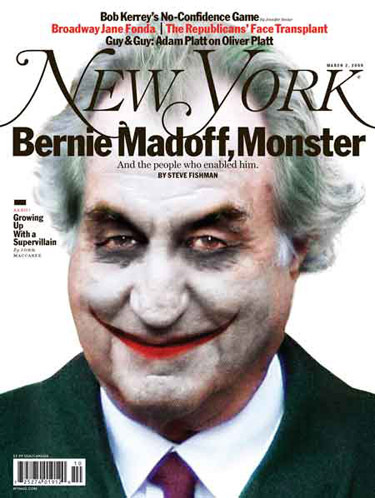
In her book "Madoff's Other Secret: Love, Money, Bernie and Me," Sheryl Weinstein reveals the details of her alleged affair with convicted Ponzi schemer Bernard Madoff, who she says was in love with her and was "a good kisser."

"He really got into it more emotionally than he expected to," Weinstein said, talking about the affair for the first time on television on "Good Morning America" today. "I think he loved me and was very afraid of that type of connection."

Weinstein writes that she met Madoff more than two decades ago while working as the chief financial officer for a Jewish charity, Hadassah, which was one of the hundreds of organizations Madoff eventually ripped off. At their first meeting, she wrote, he gave her a "welcoming smile, a smile [she'd] never forget."

"I knew instantly that he was attracted to me," she wrote. During the course of their 21-year relationship, Weinstein says she and Madoff had a sexual affair for a year and a half.
Weinstein had previously denied a romantic relationship with Madoff to ABC News earlier this summer. At Madoff's sentencing on June 29, she maintained she had only a professional relationship with Madoff, calling him a "beast."

Weinstein said today that she decided to write the book out of guilt over losing her family's money by investing with Madoff. "He took everything," she said.
"Investing money, investing my family's money was my responsibility," she said. "When this happened, the feelings of guilt, responsibility, failure became overwhelming

"I don't have any art, I don't have any jewelry," she added. "What I have to sell is my story." In addition to Weinstein's own money, according to Hadassah, the charity had invested more than $40 million with Madoff as of 1997, when it stopped adding principal. It believed its account was valued at $90 million when Madoff was arrested.

In June, Weinstein sat next to her husband of 37 years as she told the judge that Madoff "should not be given the opportunity to walk into our society again."

In response to the book, Madoff's lawyer Ira Sorkin blasted Weinstein for claiming the affair. "I certainly hope that Mrs. Weinstein was more discrete about her investment decisions on behalf of Hadassah than she was about her sex life -- and that is not to confirm the allegation [of an affair] is true," Sorkin said in a statement to "Good Morning America."

Sheryl Weinstein Shares Personal Details of Relationship With Bernie MadoffWeinstein's television appearance today follows reports that Madoff is dying of cancer -- reports that have since been dispelled by the U.S. Bureau of Prisons.

Weinstein says her long relationship with Madoff has given her insight into how he could have defrauded thousands of people, including many who were close to him.

"I think it was more important to Bernie to keep up the façade, the image at all costs … no matter what the moral implications," she said. "It was about Bernie and who Bernie had to be to the world."

That desire "could have stemmed back to his childhood," she said, adding that isn't an excuse for his actions.

In the book, Weinstein also divulges personal details about the man she referred to as "Mr. Winky Dink" because of a funny face he would make

"It was just a code name between me and a friend or two that was aware of the situation," she said.

She added that "he was a good kisser. Very nice."

As for her view of the relationship, Weinstein said, "I didn't like being second. I didn't like playing the back room type of person."

She says Madoff was afraid of what would happen if his wife, Ruth Madoff, learned of their affair. "He was petrified of Ruth … of his wife finding out," she said. "Divorces or something like that leads to books being opened … something might come out."

When asked if she had a message for Madoff, she said she wanted him to know that the victims of "this immense human tragedy ... will survive."

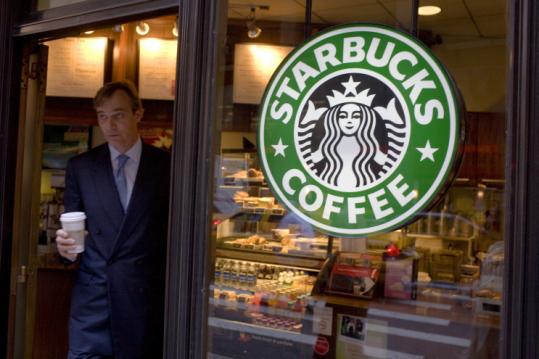
Starbucks Hikes Prices, Customers Take a Hike?


In the midst of a nasty recession, will customers want to pay more for their daily cuppa joe? Starbucks (Nasdaq: SBUX) may soon find out.


In some markets, the java giant is adjusting prices on what it calls "more complex" beverages. Some venti-sized fancy drinks will cost as much as a quarter more than they used to, but other drinks will decline in price by an average of $0.05 to $0.15.


Starbucks heralded these price changes back in April, and it's hardly clueless about the possible impact. In a memo to baristas, the company warned that its employees should "expect customers to be sensitive to pricing changes in this economic climate." In response, the chain apparently encourages baristas tell customers that the coffee giant is looking for ways to provide value. I'm not sure customers who are paying a quarter more will buy that line of thinking, but those paying a bit less just might.


Hiking prices could make sense if Starbucks wants to reestablish its credibility as a premium coffee purveyor. I could hardly complain about that, given my previous concerns that some of the company's "value" initiatives might tarnish its brand. Still, miffed customers could turn to many alternatives, including Peet's (Nasdaq: PEET), Caribou, and Green Mountain Coffee Roasters (Nasdaq: GMCR). And nobody underestimates the power of lower-end competition like McDonald's (NYSE: MCD) or Dunkin' Donuts, either.


Nor should we forget Starbucks' diminished traffic. Companies like Chipotle (NYSE: CMG) (NYSE: CMG-B) and Panera Bread (Nasdaq: PNRA) have successfully raised menu prices to offset flagging customer visits, but that's a dangerous game to play. Given its current precarious position, I have to wonder whether Starbucks should have left well enough alone.

Stocks touch new '09 highs


Stocks gained Tuesday, extending a recent rally, after reports showed that consumer confidence and home prices are starting to recover.


News that President Obama is nominating Federal Reserve chief Ben Bernanke for a second term in office added to the positive sentiment.


The Dow Jones industrial average (INDU) added 30 points, or 0.3%, according to early tallies. The S&P 500 (SPX) index gained 2 points, or 0.2%. The Nasdaq composite (COMP) rose 6 points, or 0.3%.


Stocks slipped Monday as investors took a step back after pushing the major gauges to new 2009 highs Friday. But after Monday's brief hiccup, stocks resumed their advance Tuesday.
Stock gains were pretty broad based, with 21 of 30 Dow stocks rising, led by Boeing (BA, Fortune 500), JPMorgan Chase (JPM, Fortune 500), United Technologies (UTX, Fortune 500) and Travelers Companies (TRV, Fortune 500).


But falling oil prices cut into any stock gains, dragging down the influential energy sector. Dow components Exxon Mobil (XOM, Fortune 500) and Chevron (CVX, Fortune 500) declined and the Amex Oil (XOI) index was off 1%.


Since bottoming at a 12-1/2 year low on March 9, the S&P 500 is up 52% as of Tuesday afternoon. The pace and breadth of the run up has left many Wall Streeters calling for a big selloff in September and October. But so far, there has been no indication of that.


"Generally, the market keeps moving higher even though so-called experts are saying it's overbought," said Terry Morris, senior equity manager, National Penn Investors Trust. "It's surprisingly strong. Maybe we have turned a corner."


Consumer confidence: Stocks hit the highs of the day just after the 10 a.m. ET release of the August Consumer Confidence index. The index rose to 54.1, surprising economists who thought it would rise to 47.9. The index stood at a revised 47.4 in July.


While the report was significant, it doesn't often correlate to what the consumer ends up doing, said Kim Caughey, senior equity analyst at Fort Pitt Capital Group.


"Unemployment is continuing to rise, and that's going to keep the consumer out for the time being," Caughey said. She said inventory rebuilding on the part of corporations will help support the economy in the short term, rather than a rise in consumer spending.
She said the Bernanke announcement was more notable.


Fed: President Obama nominated Ben Bernanke to chair the Federal Reserve for a second term, announcing the reappointment months ahead of the expiration of Bernanke's current term.
The reappointment is expected to receive the approval of the Senate.


"There was a bit of uncertainty around Bernanke's reappointment and the fact that the announcement was made today is driving the gains," Caughey said.


Housing: Home prices rose 2.9% in the second-quarter versus the first quarter, according to an S&P/Case-Shiller report. That's the first quarterly rise in prices in three years and could signal that the housing market has bottomed.


The 20-city index declined 15.4% in June versus a year ago, but that was shy of forecasts for a drop of 16.4% versus a year ago.


Budget: The White House released its deficit and economic forecast. It predicts a federal budget deficit of $9 trillion over the next decade and a deficit of $1.58 trillion in 2009. The $9 trillion is $2 trillion more than what the administration had forecast previously.


The Congressional Budget Office (CBO) released its own forecast shortly after the Obama administration. The CBO said the 2009 deficit will total $1.6 trillion.


World markets: European markets rallied, while Asian markets slid, with the Japanese Nikkei losing 0.7%.


Bonds: Treasury prices inched higher, lowering the corresponding yields.


Oil: U.S. light crude oil for October delivery fell $2.32 to settle at $72.05 a barrel on the New York Mercantile Exchange, after touching a new 10-month high in the morning.


response to the first of three government debt auctions this week. The rise in prices lowered the yield on the benchmark 10-year note to 3.44% from 3.47% Friday. Treasury prices and yields move in opposite directions.


Treasury sold $42 billion of 2-year notes Tuesday and is planning to sell $39 billion of five-year notes Wednesday and $28 billion of 7-year notes Thursday.
Other markets: COMEX gold for December delivery rose $2.30 to settle at $946 an ounce.
In currency trading, the dollar fell versus the euro and the Japanese yen.


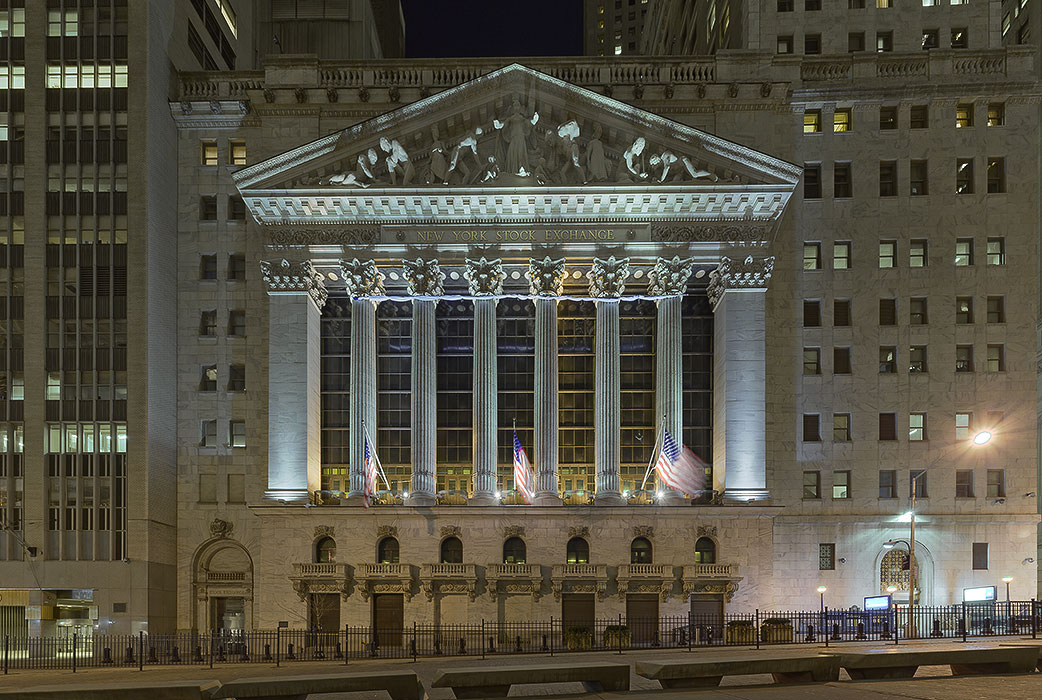
Market breadth was positive. On the New York Stock Exchange, winners topped losers three to two on volume of 890 million shares. On the Nasdaq, advancers beat decliners seven to six on volume of 1.65 billion shares.

Sunday, July 5, 2009

GM could exit Chapter 11 this month


Detroit-based GM /quotes/comstock/11i!gmgmq/quotes/nls/gmgmq (GMGMQ 0.82, -0.09, -9.64%) has been in bankruptcy court this week seeking approval to sell most of its assets to the so-called New GM, an entity that will be majority owned by the U.S. Treasury. Without that approval by July 10, the government said it would cut off funding for GM, which could lead to a liquidation.


WStreet.com auto industry analyst David Silver sees the deadline as more bluster than anything.


GM's CEO threatened liquidation by July 30 and now the auto task force is threatening July 10. I wonder if President Obama were to testify, would he throw the gauntlet for the sale to be done by July 4?" he said.


"From an American's point of view, it would be great to see the judge stand up to both GM and the administration because both have been trying to manipulate the courts," added Silver, who isn't convinced GM can pull out of bankruptcy anytime soon.
If and when the automaker does emerge, t


he U.S. government will hold about 60% and the Canadian government and a union-retiree trust fund will hold the rest.


The U.S. is looking to shed its holdings no later than 2018, in line with the Canadian government's plan, people familiar with the matter told the Wall Street Journal.


Canada would hold about 12% of the automaker and proposes to unload at least 5% of its GM shares a year until its fully divested in no more than eight years. The U.S. hasn't said how it plans to reduce its stake in GM.
A day earlier, automakers reported another month of poor U.S. sales, with GM's 33% decline for June even worse than anticipated.


GM's shares have managed to draw buying interest despite the bankruptcy, though it's a near certainty they will eventually be worthless.
Underscoring this, GM reminded investors in a statement Wednesday that it strongly believes "there will be no value for the common stockholders in the bankruptcy liquidation process, even under the most optimistic of scenarios."


The stock ended the week at 82 cents, down 9.6% in Thursday's session.

Wednesday, January 14, 2009

U.S. airline Mesa Air Group


Struggling U.S. airline Mesa Air Group (MESA.O) on Tuesday said US Airways Group (LCC.N) plans to reduce the number of aircraft it pays Mesa to fly regionally.
The carrier said the flight cuts, which are planned for January, July and next January, could continue, putting new strain on the company.


Mesa said that US Airways said it would eliminate three CRJ-200 flights by next year.
"We anticipate US Airways will continue to further reduce the number of covered aircraft in accordance with the agreement," the company said in a regulatory filing.
Mesa said that as of September 30, it operated 38 CRJ-900, 11 CRJ-200, and 6 Dash-8 aircraft for US Airways under a code-share agreement.


Mesa, which provides regional service for US Airways, Delta Air Lines (DAL.N) and other carriers has been looking to shore up its finances for months as it tries to ride out volatile fuel prices and a drop in travel demand.


Mesa said on Monday it received a letter from Nasdaq warning the company its stock is subject to delisting because Mesa was not in compliance with some listing requirements.
Mesa shares were down 10 percent at 26 cents in afternoon trade on the Nasdaq.

Tuesday, January 13, 2009

Yahoo Shares


Yahoo stock closed down 91 cents, or 6.9 percent, to $12.22. The stock has ranged between $8.94 and $30.25 over the past year.


American Technology Research analyst Rob Sanderson wrote in a note to investors that he expects a significant slowdown in online shopping.


Sanderson also wrote that he expects "the online advertising market to take a much greater than seasonal decline" in the first three months of 2009. The post-holiday first quarter is traditionally slower for online ad spending.


However, Sanderson noted that the possibility of a sale to Microsoft Corp. or another sort of deal could keep Yahoo's stock from falling too far.


"We continue to believe this is the ultimate outcome and will reward Yahoo shareholders, but have no visibility on timing," Sanderson wrote.


The analyst downgraded shares of Sunnyvale, Calif.-based Yahoo to "Neutral" from "Buy" and cut his price target to $14.50 from $18.

Goldcorp

I can think of no more essential question to pose to investors during these tumultuous times. I could, of course, state it more eloquently: "Pardon me, would you happen to have any Goldcorp (NYSE: GG)?"

A flurry of downgrades and target-price reductions rained down upon Goldcorp after the company released lowered guidance late last week, projecting a pit stop for production growth during 2009. Until those analysts begin including their gold price forecasts alongside their outlook for miners, however, I find it best to tune them out entirely. It is indeed unfortunate that declining production from mines like Goldcorp's El Sauzal will offset many of the gains from the newer ones this year, but I continue to urge Fools to focus upon the larger picture.

The newly issued forecast for 50% production growth through 2013 is only about 5% below what analysts had targeted, and the starting point of 2.3 million ounces of gold produced in 2008 is nothing to sneeze at. Goldcorp continues to post impressive cost metrics, with anticipated 2008 costs of about $300 per ounce of gold and about $365 for 2009. I have heaped praise upon intermediate miners like Yamana Gold (NYSE: AUY) and my top pick Agnico-Eagle Mines (NYSE: AEM) on the basis of their low cost structure, but Goldcorp achieves similar margins on a much grander scale.

After divesting its sizeable stake in spin-off Silver Wheaton (NYSE: SLW) a year ago, Goldcorp's debt-free balance sheet is a thing of beauty. Nonetheless, the company is deferring some longer-range development projects to focus resources upon the three core properties under development: Penasquito, Red Lake, and Pueblo Viejo. Penasquito is truly a world-class deposit, and will be the primary driver of Goldcorp's production growth for years to come. At Red Lake, where Goldcorp founder Rob McEwen has struck another bonanza through junior explorer Rubicon Minerals (AMEX: RBY), Goldcorp will obtain more than one quarter of 2009 production despite deferring some improvement projects. Of the $1.4 billion Goldcorp plans to spend in 2009, $430 million will go to Pueblo Viejo, a joint venture with larger rival Barrick Gold (NYSE: ABX).

Bring on the downgrades, analysts! In the long run, I believe they can only help Fools by creating more attractive entry points. After shares promptly doubled from their October low, we frankly needed a little consolidation.

Sunday, January 11, 2009

israel defence force


Obama Smoking


Yahoo!


Yahoo! is getting closer to picking a new chief executive to replace Jerry Yang and investors are abuzz about who might be on top. While two names are riding the rumor circuit, Yahoo! might need something that neither of the named candidates has: youth.


On Friday speculation began circulating about possible CEO picks after a report said the Internet company narrowed its search to Carol Bartz, the current chairwoman of Autodesk (nasdaq: ADSK ), Susan Decker, Yahoo! (nasdaq: YHOO )’s president, and one other candidate.


Yahoo! is expected to make a decision before its earnings report on Jan. 27.
Yahoo’s shares rose 0.5% to $13.13, at the close on Friday.

Global Equities Research analyst Trip Chowdhry said that the ideal candidate is neither Bratz nor Decker, but a 25 to 30 year-old Steve-Jobs-like-wunderkind who is brash and product savvy. The problem with Yahoo! he said is products, technology, and motivation, and the new leader will have to be able to deal with all three. “If Bartz becomes CEO, investors should run the other way,” said Chowdhry. “Autodesk is a prehistoric company when it comes to technology. We want someone who can cut through the generation gap and who can take the company to the next level.”


Chowdhry doesn’t see an outside candidate taking the reins of Yahoo! and said that any internal promotion would probably come from the engineering ranks. “If someone is super bright Yahoo! is not going to be their first choice, it’s not going to be their second choice and it’s not going to be their third choice,” said Chowdhry. “I haven’t seen any person externally who can change the fortunes of Yahoo!”


Chowdhry isn’t happy with Decker as a pick either. “She oversaw three failed CEO’s and under her leadership the stock has gone down more than 80.0%,” he said.

Thursday, August 28, 2008

where the market is heading

For the next couple of months we can expect the market, as we have seen oil prices that we expected to reach $120 has passed $145 back to the $114-120 range , and for gold its soaring as the U.S dollar is gaining strength , but for Oil , Gold and most of the sectors are heading up.

For the past couple of years everybody has been talking about recession and the falling economy , that's only spreading rumors for weak investors like those who immediately sell as they hear about oil & gas future expectations , That's not true the market is in a well condition, i can tell its a bull market for the rest of this year.

i haven't blogged since Google (goog) announced its second quarter earnings report based on its Internet advertisement sales which is a big lie to little individuals who open their AdSense accounts as to earn with Google, but the truth is that they work for Google for free and they get a foot in the ass just as they are about to get paid.

That was my first post and its my return to the market we share but this time no AdSense , a quick pick for you my fellow investor you can comfortably go short MCD at about $63 to $65 and pt a summer watermelon in your stomach.

Friday, April 11, 2008

Airlines Best Fares


Just about every air-travel trend is getting worse, driven largely by soaring jet-fuel prices. To save money, strapped carriers are adding every surcharge they can get away with, raising fares, eliminating perks, and cutting back flights.

That means air travel is going to get more stressful than ever. Most flights will be full, with crammed overhead bins and no chance for a better seat. Delays have hit record levels recently and will probably get worse. And there will be less margin for error, so a problem with one flight could quickly cascade to others.

Frequent fliers who spend a lot on air tickets, of course, get the best seats and other preferential treatment--and often know the best tricks for traveling smoothly. The rest of the flying public has less recourse. But there are a few things you can do to reduce the odds of a middle seat, a lost bag, a surprise surcharge, or a nightmare trip:

Book directly with the airline. Use websites like Orbitz, Travelocity, and Expedia to research flights, but once you've found the one you want, book through the airline's website or a live agent. That's often where you'll find the best fare and have the best chance of getting an aisle or window seat. And if something goes wrong, the airline is more likely to help if you originally made the reservation through it.

Use every automated service available. Airlines have replaced many of their live agents with online services and machines at the airport--one trend that actually benefits travelers. Fliers with no bags to check can avoid lines by printing their boarding pass either at the airline's website up to 24 hours in advance or at an airport kiosk. This is also a chance to check whether a better seat is available. The sooner you check in, the better--all your fellow travelers are doing the same thing, and if any choice seats are still left, they'll go to whoever claims them first.

Pack light--really light. Most airlines allow one checked bag at no extra charge but now tack on $25 for a second checked bag. That's meant to bring in a bit of extra revenue--but also to encourage passengers to pack less, to help cut down on the weight in the plane and reduce fuel use. Some fliers try to skirt the surcharge by packing two bags' worth of stuff into one huge suitcase. Bad idea--many airlines also charge $100 for an overweight bag.

Then there are fliers who stuff a week's worth of gear into an oversize carry-on. That can backfire, too. On full flights, the overhead bins are often full before half the passengers have even boarded, and that bulging duffel won't fit under a seat, either. That means it will end up getting checked, costing you--and those around you--lots of added inconvenience.

Better to underpack and pick up spare socks or underwear at your destination if you really need them. If you're transporting gifts or anything that can be shipped by mail or UPS, do that ahead of time. It'll cost less than that $100 surcharge.

Fly off-off-peak. A red-eye or crack-of-dawn departure might cost you some sleep--but buy you some comfort. The only flights these days with any chance of a light load are those at the start or end of the day, when airlines are often moving planes into position for a long shift of full-capacity hauling.

Consider paying for a more comfortable seat. Some airlines now charge an extra $15 or $20 for exit-row seats or other spots in coach that tend to have a bit more legroom or are closer to the front of the plane. Get over the outrage, and pay up. "It's not such a terrible amount to pay to be comfortable," says David Stempler, president of the Air Travelers Association. Paying the extra fee might also entitle you to board before the rest of the horde, ensuring an overhead spot for your bag and less jostling.

Look into the government's Registered Traveler program. Fliers who enroll in this new program agree to supply personal info and submit to a background check, in exchange for an ID that allows them to pass through expedited security lines at the airport. Road warriors who have VIP status with their airline often get access to express security lines, anyway, and wouldn't need it. And so far, just a few airports and carriers participate, so it makes sense only for certain travelers. But this program is likely to grow quickly, and for people who travel once or twice per month, the cost--about $100 upfront, plus a $28 annual fee--might seem quite reasonable if it takes one long line out of the usual airport experience.

Be a low-maintenance traveler. Flights go more smoothly for people who do what they're supposed to. Check the Transportation Security Administration's website before your trip for the latest baggage rules. Use a regulation-size carry-on. Pack snacks. Most important, with so many things that can go wrong, arrive early, and have a backup plan. "Time is your friend," says Stempler. "Getting there late only puts you at a disadvantage." And no traveler wants to start a flight like that.

Thursday, April 10, 2008

Microsoft and News Corp Bid for Yahoo

Yahoo and AOL are reportedly on the verge of announcing a surprise merger plan, as part of a brilliant Yahoo counter-attack. And now Andrew Ross Sorkin and Miguel Helft of the NYT report that Microsoft and News Corp (NWS) are in talks to make a joint bid for Yahoo:

Rupert Murdoch’s News Corporation (NWS) is in talks with Microsoft (MSFT) about joining in its contested bid for Yahoo, according to people involved in the discussions. The pairing, which would combine Yahoo (YHOO), Microsoft’s MSN and News Corporation’s MySpace, would create a behemoth that would upend the Internet landscape.

If News Corporation throws its weight behind Microsoft’s offer, it could allow Microsoft to raise its bid, putting even more pressure on Yahoo and its shareholders. At the same time, the alignment of Microsoft and News Corporation would remove a possible alternative for Yahoo, leaving it with fewer opportunities to escape Microsoft’s grasp.

The talks between Microsoft and News Corporation are at a sensitive stage, people involved in the discussions said. “There’s a long way to go before anything is definite,” one person involved in the talks said.

Would this combination make sense? Sure it would make sense. Owning MySpace standalone isn't doing Rupert any good--he's getting his clock cleaned by Facebook. MSN's dead in the water. But throw all that together with Yahoo and you could build a pretty honkinging global communications, social networking, and advertising platform.

Rupert's got some cash, too, which means that the two might be able to pay more without infuriating their own shareholders bases.

In any event, at this point, you gotta believe Yahoo's stock is going up.

Don't Miss

AOL and Yahoo May Announce Merger Next Week

Wednesday, April 9, 2008

American Airlines Cancels Flights

Business trips and vacations were disrupted for tens of thousands of travelers Wednesday as American Airlines canceled more than 1,000 flights -- nearly half its schedule -- to fix faulty wiring that could cause a short-circuit or even a fire and explosion.

Executives at American said safety was never compromised, and they suggested the nation's biggest airline was the victim of suddenly stepped-up scrutiny by federal regulators.

American estimated that more than 100,000 travelers were booked on the canceled flights. Many had to scramble to book new flights and were stranded at hotels far from home.

The airline had already scrubbed 460 flights on Tuesday after federal inspectors found problems with wiring work done two weeks ago, during the first set of shutdowns.

A top executive said the cancellations would be a "significant" cost to American, and shares of parent AMR Corp. fell 11.1 percent, down $1.15 to $9.17.

The issue stems from an order that the Federal Aviation Administration gave airlines in September 2006 -- and gave airlines until last month to meet -- about the bundling of wires in the backup power system for the fuel pump of the MD-80 airplanes. The fear is that improperly bundled wires could rub, leading to an electrical short or even fire. However, no serious incidents have been blamed on the bundles, the FAA said.

American officials thought they had fixed the problem last month. But this week, FAA inspectors found problems with the work done on more than a dozen planes. American said it had no choice but to ground all 300 of its MD-80s to deal with the wiring bundles.

American operates about 2,200 daily flights, more than one-third with MD-80s. Nearly half the cancellations were concentrated at two airports, in Dallas and Chicago.

At New York's LaGuardia Airport on Wednesday, hundreds of passengers stood in check-in lines or milled about, using cell phones to get updates on their flights. The airline offered free doughnuts, coffee and orange juice, but there were few takers.

"They should be able to predict these kinds of things," said Laura Goodman, whose flight home to Dallas was canceled. She said would miss an important meeting because the airline couldn't rebook her until Thursday.

New Yorker Michelle Soss had hoped to steal a few days in Albuquerque, N.M.

"I covered my kids' schedules, I covered my work schedule to get away for a few days," she said. "I don't know if I'm getting anywhere."

American's cancellations came after similar delays at Southwest, Delta and United. Last week, hundreds of travelers were marooned when Aloha Airlines and ATA Airlines shut down and filed for bankruptcy protection.

Alaska Airlines said Wednesday it canceled 14 flights to inspect the wiring on its nine MD-80s.

For travelers, the bad news might not be over. Daniel Garton, American's executive vice president, said flights would be canceled Thursday -- he said it was too early to say how many -- and possibly on Friday, too.

A return to normal operations depends on how quickly mechanics can inspect and fix the wire bundles. As of Wednesday morning, only 30 MD-80s had been cleared to fly by the FAA.

Garton acknowledged that the bundling of wires had not met FAA standards, but he said "these were not huge errors" and posed no threat to safety. He said the agency used to give airlines "latitude" in interpreting safety regulations, but no longer.

The FAA began looking more closely at airlines' compliance with safety directives in recent weeks, after it was criticized for letting Southwest operate planes that had missed inspections for cracked fuselages.

In the past few weeks, the FAA levied a $10.2 million penalty against Southwest and conducted new inspections at all U.S. airlines, leading to flight cancellations at Southwest, Delta and United.

FAA spokeswoman Diane Spitaliere said inspectors found problems with the wiring bundles at 15 of 19 American MD-80s that it checked this week.

The 2006 safety order from the FAA directs airlines in how to pack and stow wiring to a hydraulic pump in the wheel well to prevent the wires from rubbing together.

According to the FAA, shorted wires could ignite fuel vapors and cause a fuel-tank explosion that could destroy a plane.

The explosion of TWA Flight 800 off New York's Long Island that killed all 230 people aboard in July 1996 was blamed on fuel vapors ignited by wiring. But it was a Boeing 747, not an MD-80, and investigators believe the disaster involved different wiring from the bundles now under scrutiny.

Brian Stirm, an aircraft-maintenance expert at Purdue University, said airlines had plenty of time for the inspections and that even an untrained mechanic could spot a problem.

The cancellations could hardly come at a worse time for American. Its parent, AMR Corp., is scheduled to report first-quarter earnings in two weeks, and analysts are forecasting a loss of more than $300 million. High fuel prices and the downturn in the economy are hurting the industry.

American officials said the company would give $500 travel vouchers to anyone stranded overnight. It also paid for hotel rooms and meals for an undisclosed number of passengers.

Bob McAdoo, an airline analyst, said passengers might soon forget the debacle, especially since several other major airlines have canceled flights recently. But he said passengers who missed big events like weddings might avoid American again.

Kathy Neer of Santa Fe, N.M., was caught up in both waves of cancellations to and from a vacation in Paris. She and her husband were stranded in Dallas on Tuesday on the final leg of their journey home. American gave the Neers a voucher for a hotel room and seats on another flight home Wednesday.

"They say our flight is leaving at 3:55 p.m., but do you think we trust them?" Neer said. "After being burned twice, we're a little skeptical."

Monday, April 7, 2008

Hewehi Market Updates

The major indices are holding near their best levels of the session. Financials (+1.9%) led the recent buying interest, taking the leadership spot from the energy sector (+1.5%).

Market breadth leans bullish. Advancers outpace decliners by more than 2-to-1 on the NYSE and by 4-to-3 on the Nasdaq. New 52-week highs outpace new lows by 61-to-1 on the NYSE, and are even on the Nasdaq. Volume is on the light side.DJ30 +93.30 NASDAQ +14.61 SP500 +12.43 NASDAQ Dec/Adv/Vol 1180/1616/802 mln NYSE Dec/Adv/Vol 951/2097/530 mln

The stock market has maintained last week’s bullish bias. At midday, the stock market is posting a substantial gain, with all ten economic sectors in positive territory. Market moving news has been relatively slow this session, with only one economic report set for release later in the afternoon, and no earnings reports.

Shares of Washington Mutual (WM 23.99, +2.44) have soared 24% on reports that it is close to a deal that will supply the struggling company with $5 billion in capital. The Wall Street Journal reports the deal will be funded by private-equity firm TPG and other investors.

Meanwhile, UBS (UBS 35.29, +1.64) is posting a healthy gain after being upgraded to Buy from Neutral at Merrill Lynch.

As a result, the financials sector has climbed 1.7%, and is providing leadership.

Microsoft (MSFT 29.27, +0.11) sent Yahoo! (YHOO 27.81, -0.55) a letter, warning that if Yahoo does not accept its Jan. 31 $44.6 billion offer, Microsoft will take its offer hostile by going directly to shareholders, according to reports. Yahoo responded that it is open to a deal with Microsoft, but feels the current offer undervalues the company.

In other deal news, Novartis (NVS 50.82, -1.30) is paying $11 billion to acquire a 25% stake in Alcon (ACL 153.61, +5.17) from Nestle.

Crude oil has rallied 2.9% to $109.25 per barrel. There does not appear to be a specific catalyst for the gains. As a result, the energy sector (+1.7%) has been a standout.
DJ30 +86.87 NASDAQ +13.81 SP500 +11.96 NASDAQ Dec/Adv/Vol 1138/1641/710 mln NYSE Dec/Adv/Vol 914/2095/471 mln

The stock market is trying to recover back to its session highs. The recent gains have been broad-based, with all ten economic sectors making it back to positive territory. Treasuries are facing some selling interest, with the 10-year note shedding 24 ticks.DJ30 +68.55 NASDAQ +10.16 SP500 +9.25 NASDAQ Dec/Adv/Vol 1140/1608/601 mln NYSE Dec/Adv/Vol 927/2046/396 mln

The Nasdaq fell to the unchanged mark, but has since recovered a bit as it posts a modest gain. All sectors have slipped off their best levels. Materials is now up only 0.8%, after being up as much as 1.9%. It remains the only sector in positive territory year-to-date, with a 3.7% advance.DJ30 +47.17 NASDAQ +8.46 SP500 +7.75 NASDAQ Dec/Adv/Vol 1167/1555/505 mln NYSE Dec/Adv/Vol 921/2005/328 mln

The major indices continue to post a gain, but are off their best levels of the morning. Four of the ten economic sectors are in negative territory, although their losses are modest.

The stock market is now up 9.6% from its 52-week low that was reached on March 17, with financials rebounding 17.8%.DJ30 +34.36 NASDAQ +7.02 SP500 +6.55 NASDAQ Dec/Adv/Vol 1190/1409/364 mln NYSE Dec/Adv/Vol 954/1903/235 mln

After dipping a bit, the major indices are trading near their opening highs. Washington Mutual (WM 11.95, +1.78) is spiking 17.5% on the capital infusion report.

The energy sector (+1.7%) is showing strength as crude rallies 2.1% to $108.45 per barrel. There is not a specific catalyst for the gain in crude oil prices. The materials sector (+1.8%) is providing leadership, as the fertilizer & agricultural chemicals group extends its rally.

Defensive oriented utilities (-0.2%), consumer staples (flat) and healthcare (+0.2%) are underperforming on a relative basis.

This session's economic calendar is light, with only the February consumer credit report at 15:00 ET.DJ30 +56.18 NASDAQ +13.14 SP500 +8.26 NASDAQ Dec/Adv/Vol 937/1516/229 mln NYSE Dec/Adv/Vol 780/2002/159 mln

The major indices open on a high note. Financials (+0.9%) are outperforming after the Wall Street Journal reported Washington Mutual (WM) is close to getting a $5 billion capital infusion from a private equity group and other investors.

Also topping headlines, is news that Microsoft (MSFT) sent Yahoo! (YHOO) a letter that stated Yahoo has three weeks to accept Microsoft's offer. Yahoo responded it is not against a deal with Microsoft, but the current offer is not in the best interest for Yahoo's shareholders.

DJ30 +43.90 NASDAQ +9.97 SP500 +6.91

S&P futures vs fair value: +9.7. Nasdaq futures vs fair value: +6.2.

S&P futures vs fair value: +9.4. Nasdaq futures vs fair value: +6.0.

S&P futures vs fair value: +11.9. Nasdaq futures vs fair value: +10.8. Current indications suggest a positive start to trading. In commodity trading, crude oil is up 1.1% to $107.38 per barrel. Gold is up 0.7% to $915.40 per ounce.

S&P futures vs fair value: +11.3. Nasdaq futures vs fair value: +10.3. Futures suggest a higher open to the trading day. Washington Mutual (WM) is close to completing a deal to get a $5 billion capital infusion from private-equity firm TPG and other investors, according to the Wall Street Journal. Microsoft (MSFT) has threatened a hostile takeover of Yahoo!(YHOO), if Yahoo does not agree to a merger within the next three weeks, according to the Wall Street Journal. Yahoo responded that it is not opposed to a deal with Microsoft, but feels the current offer undervalues Yahoo. In other deal news, pharmaceutical company Novartis AG (NVS) is buying a 25% stake in eye-care product maker Alcon (ACL), and may purchase another 52%.

06:13 am : S&P futures vs fair value: +12.0. Nasdaq futures vs fair value: +12.0.

06:13 am : FTSE...5990.30...+43.20...+0.7%. DAX...6826.34...+62.34...+0.9%.

06:13 am : Nikkei...13450.23...+157.01...+1.2%. Hang Seng...24578.76...+314.13...+1.3%.

Stocks Head to Higher Open

Stocks were poised to open higher Monday after several reports of potential corporate deals, including speculation Washington Mutual Inc. will get a $5 billion investment from private equity firms.

The nation's largest thrift is in talks with buyout shop TPG Inc. about a possible capital injection, according to The Wall Street Journal. The company, which has suffered big losses tied to subprime mortgages, would become the latest U.S. financial institution to reach such a deal.

In addition, Microsoft Corp. gave Yahoo Inc. a three week deadline to agree to a takeover, or Microsoft would launch a proxy fight for control of the company. Yahoo said Monday the deal isn't in the best interests of its shareholders, and called the proxy threat counterproductive.

And Swiss pharmaceutical maker Novartis AG said it will spend about $38 billion in a two-step bid for a majority stake in U.S. eye-care company Alcon Inc.

Earnings season unofficially begins after the closing bell when Alcoa Inc., the world's third-largest aluminum producer, is scheduled to release first-quarter results.

Dow Jones industrial average futures rose 69, or 0.70 percent, to 12,679. Standard & Poor's 500 index futures advanced 11.90, or 0.87 percent, to 1,383.80. Nasdaq 100 index futures rose 15.75, or 0.84 percent, to 1,885.50.

Bond prices fell. The yield on the benchmark 10-year Treasury note, which moves opposite its price, rose to 3.52 percent from 3.47 percent late Wednesday.

Light, sweet crude rose $1.16 to $107.39 in premarket electronic trading on the New York Mercantile Exchange. Gold was higher, and the dollar was mixed against other major currencies.

There were no major economic reports scheduled to be released during the session.

Overseas, Japan's Nikkei stock average rose 1.18 percent. Britain's FTSE 100 added 0.95 percent, Germany's DAX index rose 0.32 percent, and France's CAC-40 added 1.13 percent.

Sunday, April 6, 2008

investors Await 1Q Earnings

The fear of the unknown that has rattled the stock market for months appears to be fading. The question now is whether upcoming corporate financial reports and readings on the housing market will further calm Wall Street's anxieties or rekindle them.

Stocks rose early last week and, despite data showing that U.S. employers are eliminating more jobs than they have in five years, held onto their gains. There was a palpable relief that some banks such as Merrill Lynch & Co. feel they have enough cash, while others in need of capital -- namely Lehman Brothers Holdings Inc. and Switzerland's UBS AG -- are able to sell stock to raise cash.

Now that JPMorgan Chase & Co. has offered to buy Bear Stearns Cos. and the Federal Reserve has lent hundreds of billions of dollars to banks, investors are more confident that the financial system can bounce back from what looked last month like a worst-case scenario: a big bank on the brink of collapse.

Wall Street knows other problems could arise, but at this point the overriding sentiment is that troubles down the road won't pull the whole market and economy down with them.

"There's been so much talk of recession for so long now. If anything, I get the sense that people are looking to get back in," said Brian Gendreau, investment strategist for ING Investment Management. But they're apprehensive, he added. "There's bad economic news still coming in. It takes some pretty steely nerves."

The Dow Jones industrial average finished last week up 3.22 percent, the Standard & Poor's 500 index rose 4.86 percent, and the Nasdaq composite index ended up 4.20 percent.

The stock market's recovery was aided by selling exhaustion among big investors. Although it's impossible to predict the market's direction, it's likely that stocks are going to be driven less by investors' need to cash out, and more by the fundamentals underlying each stock. Those fundamentals will be determined mostly by profit reports.

Alcoa Inc. on Monday reports first-quarter results, and analysts, on average, predict the aluminum company's earnings per share fell 36 percent from where they were last year. Another Dow component, General Electric Co., reports on Friday, and the average analyst estimate is for a 16 percent gain in per-share earnings.

The big headliners, however, are likely to be next week's bank earnings.

Last week, the various banks traded more divergently from one another than they have in months, indicating that there is less fear about the sector as a whole. This is not to say the battered financial sector's troubles are over. Rather, there are winners and losers emerging, and market participants know that buying the winners now could bring huge returns in the months and years to come.

Meanwhile, the Fed on Tuesday is scheduled to release minutes from its March 18 meeting, when it lowered the key interest rate to 2.25 percent. Though the minutes will be regarded to some extent as old news -- they precede the Bear Stearns buyout -- investors will want to see evidence that the Fed remains ready to come to the financial system's rescue if the credit markets deteriorate further.

It's certainly possible the credit markets, though they've loosened up over the past week, could seize up again. The reason is the housing market is anticipated to take at least another year to recover. On Tuesday, economists expect the National Association of Realtors to report that pending sales of homes in February were only slightly higher than in January -- which saw the second-lowest reading on record.

"The core, the kernel, of the credit problems are mortgages," said Quincy Krosby, chief investment strategist at The Hartford. She said defaults in Alt-A mortgages may spike higher since they became popular relatively late in the mortgage boom. Alt-A mortgages are loans to individuals with cleaner credit records than subprime borrowers, but who are not considered prime.