Check These are The Best Links from Google
Showing posts with label New York Mercantile Exchange. Show all posts

Tuesday, August 25, 2009

Ben Bernanke


For an academic from Dillon, S.C., Ben Bernanke is an unlikely gunslinger.
In nominating the Federal Reserve chairman to a second term, President Obama on Tuesday compared Bernanke's efforts to avert a second Great Depression to FDR's "bold, persistent experimentation" to get the country out of the first one.

But Bernanke's efforts weren't easy -- or without critics.

The Fed has taken on unprecedented risk: It took on a trillion dollars of troubled assets, slashed interest rates, bailed out financial industry titans and launched more than a dozen expensive lending programs.

Bernanke is sure to face a lively confirmation debate in the Senate before his first term is up in January of next year.
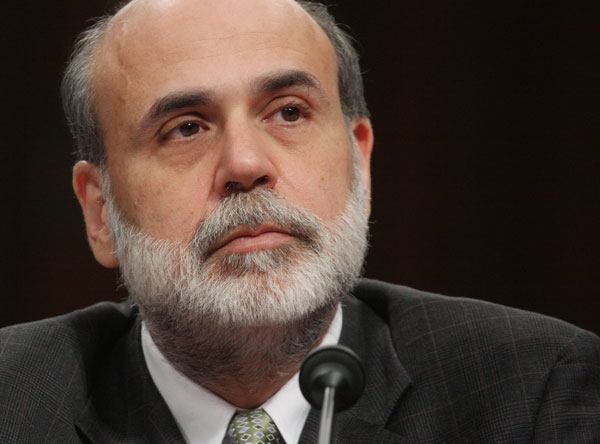
"The problem with all of the risk is that it has created an unhappiness with Congress," said Lyle Gramley, a former Fed governor. "It's going to create problems for Bernanke in his confirmation, but these things had to be done to prevent an absolute meltdown in the economy."
Exit strategy: Walking the tightrope

In part because of the Fed's aggressive efforts, there are some signs that the economy -- in free-fall late last year -- has stabilized. Gross domestic product is not falling as steeply. Neither are job losses. On Tuesday,home prices posted their first gain in three years from weak levels earlier in the year. U.S. stocks are rallying, up more than 50% in 5 months.

But all of the Fed's moves come at a cost: potential inflation down the road if the central bank is unable to rein back in the money it has pumped into the system.

Bernanke has acknowledged that concern, saying that the Fed will wind down the programs as the economy enters a recovery phase and will begin to raise interest rates.
"The fact that he had to take on a lot of risk and we have these huge debt loads shouldn't be a complete surprise -- after all, this is the Great Recession, the worst downturn we've seen since the Great Depression," said Lakshman Achuthan managing director Economic Cycle Research Institute.
"It's not about how much, it's about when they exit from this: If they leave too early, we get deep deflation, and we get spiraling inflation if they leave too late," he added. "It's a high-wire act the Fed is performing."


But that may be easier said than done. Bernanke and the Fed have come under intense scrutiny for missing the subprime mortgage bubble, and the risky solution to the crisis may lead us down the same path again.

"Bernanke has demonstrated that he is skilled at high-drama, emergency surgery, but it's not at all clear that he is good at preventative medicine to avoid the need to visit the ER," said Achuthan. "We are all hopeful that they get the timing right, but I wouldn't bet on that heavily."
Gramley agreed that timing is everything, but argued that Bernanke is the best man for the job -- because he's the one that got us into this situation.

"Obama's nomination is not just a reward for Bernanke's past performance," said Gramley. "He is the most well-qualified person to deal with the problems that the Fed has created for itself by doing what it had to do to avoid another Great Depression."
Risky assets: Counting to a trillion

The Fed's balance sheet is a measure of the assets that the central bank holds on to. Prior to the Sept. 15 collapse of Lehman Brothers, which marked the start of the credit crisis and the point in which the recession took a turn for the worse, the Fed held less than $1 trillion in assets, most of which were in safe U.S. Treasurys.

By mid-December, the Fed's balance sheet had more than doubled to over $2.3 trillion. Many of those holdings are mortgage-backed securities -- the hard-to-value assets that brought down the financial sector.

The massive expansion began after Sept. 15, when Bernanke's Fed began rolling out lending program after lending program, sending banks cash in exchange for the risky assets.
There is a Fed program that buys up corporate debt, a program that funds foreign central banks with billions of dollars, direct purchases of mortgage-backed securities from Fannie Mae (FNM, Fortune 500) and Freddie Mac (FRE, Fortune 500), loans to AIG and ramped-up purchases of government bonds, among many others.

These initiatives have been largely successful at restoring lending among banks, and financial institutions have begun to withdraw from the programs. But the Fed is still hanging onto a majority of the assets it has taken on in the past year, and the balance sheet now stands at just under $2.1 trillion.

In another bold move, Bernanke and the Fed dropped interest rates to a record-low range of 0% to 0.25% in December in an effort to jumpstart lending. Prior to December, rates had never been below 1%.

Stocks touch new '09 highs


Stocks gained Tuesday, extending a recent rally, after reports showed that consumer confidence and home prices are starting to recover.


News that President Obama is nominating Federal Reserve chief Ben Bernanke for a second term in office added to the positive sentiment.


The Dow Jones industrial average (INDU) added 30 points, or 0.3%, according to early tallies. The S&P 500 (SPX) index gained 2 points, or 0.2%. The Nasdaq composite (COMP) rose 6 points, or 0.3%.


Stocks slipped Monday as investors took a step back after pushing the major gauges to new 2009 highs Friday. But after Monday's brief hiccup, stocks resumed their advance Tuesday.
Stock gains were pretty broad based, with 21 of 30 Dow stocks rising, led by Boeing (BA, Fortune 500), JPMorgan Chase (JPM, Fortune 500), United Technologies (UTX, Fortune 500) and Travelers Companies (TRV, Fortune 500).


But falling oil prices cut into any stock gains, dragging down the influential energy sector. Dow components Exxon Mobil (XOM, Fortune 500) and Chevron (CVX, Fortune 500) declined and the Amex Oil (XOI) index was off 1%.


Since bottoming at a 12-1/2 year low on March 9, the S&P 500 is up 52% as of Tuesday afternoon. The pace and breadth of the run up has left many Wall Streeters calling for a big selloff in September and October. But so far, there has been no indication of that.


"Generally, the market keeps moving higher even though so-called experts are saying it's overbought," said Terry Morris, senior equity manager, National Penn Investors Trust. "It's surprisingly strong. Maybe we have turned a corner."


Consumer confidence: Stocks hit the highs of the day just after the 10 a.m. ET release of the August Consumer Confidence index. The index rose to 54.1, surprising economists who thought it would rise to 47.9. The index stood at a revised 47.4 in July.


While the report was significant, it doesn't often correlate to what the consumer ends up doing, said Kim Caughey, senior equity analyst at Fort Pitt Capital Group.


"Unemployment is continuing to rise, and that's going to keep the consumer out for the time being," Caughey said. She said inventory rebuilding on the part of corporations will help support the economy in the short term, rather than a rise in consumer spending.
She said the Bernanke announcement was more notable.


Fed: President Obama nominated Ben Bernanke to chair the Federal Reserve for a second term, announcing the reappointment months ahead of the expiration of Bernanke's current term.
The reappointment is expected to receive the approval of the Senate.


"There was a bit of uncertainty around Bernanke's reappointment and the fact that the announcement was made today is driving the gains," Caughey said.


Housing: Home prices rose 2.9% in the second-quarter versus the first quarter, according to an S&P/Case-Shiller report. That's the first quarterly rise in prices in three years and could signal that the housing market has bottomed.


The 20-city index declined 15.4% in June versus a year ago, but that was shy of forecasts for a drop of 16.4% versus a year ago.


Budget: The White House released its deficit and economic forecast. It predicts a federal budget deficit of $9 trillion over the next decade and a deficit of $1.58 trillion in 2009. The $9 trillion is $2 trillion more than what the administration had forecast previously.


The Congressional Budget Office (CBO) released its own forecast shortly after the Obama administration. The CBO said the 2009 deficit will total $1.6 trillion.


World markets: European markets rallied, while Asian markets slid, with the Japanese Nikkei losing 0.7%.


Bonds: Treasury prices inched higher, lowering the corresponding yields.


Oil: U.S. light crude oil for October delivery fell $2.32 to settle at $72.05 a barrel on the New York Mercantile Exchange, after touching a new 10-month high in the morning.


response to the first of three government debt auctions this week. The rise in prices lowered the yield on the benchmark 10-year note to 3.44% from 3.47% Friday. Treasury prices and yields move in opposite directions.


Treasury sold $42 billion of 2-year notes Tuesday and is planning to sell $39 billion of five-year notes Wednesday and $28 billion of 7-year notes Thursday.
Other markets: COMEX gold for December delivery rose $2.30 to settle at $946 an ounce.
In currency trading, the dollar fell versus the euro and the Japanese yen.


Market breadth was positive. On the New York Stock Exchange, winners topped losers three to two on volume of 890 million shares. On the Nasdaq, advancers beat decliners seven to six on volume of 1.65 billion shares.

Monday, April 7, 2008

Stocks Head to Higher Open

Stocks were poised to open higher Monday after several reports of potential corporate deals, including speculation Washington Mutual Inc. will get a $5 billion investment from private equity firms.

The nation's largest thrift is in talks with buyout shop TPG Inc. about a possible capital injection, according to The Wall Street Journal. The company, which has suffered big losses tied to subprime mortgages, would become the latest U.S. financial institution to reach such a deal.

In addition, Microsoft Corp. gave Yahoo Inc. a three week deadline to agree to a takeover, or Microsoft would launch a proxy fight for control of the company. Yahoo said Monday the deal isn't in the best interests of its shareholders, and called the proxy threat counterproductive.

And Swiss pharmaceutical maker Novartis AG said it will spend about $38 billion in a two-step bid for a majority stake in U.S. eye-care company Alcon Inc.

Earnings season unofficially begins after the closing bell when Alcoa Inc., the world's third-largest aluminum producer, is scheduled to release first-quarter results.

Dow Jones industrial average futures rose 69, or 0.70 percent, to 12,679. Standard & Poor's 500 index futures advanced 11.90, or 0.87 percent, to 1,383.80. Nasdaq 100 index futures rose 15.75, or 0.84 percent, to 1,885.50.

Bond prices fell. The yield on the benchmark 10-year Treasury note, which moves opposite its price, rose to 3.52 percent from 3.47 percent late Wednesday.

Light, sweet crude rose $1.16 to $107.39 in premarket electronic trading on the New York Mercantile Exchange. Gold was higher, and the dollar was mixed against other major currencies.

There were no major economic reports scheduled to be released during the session.

Overseas, Japan's Nikkei stock average rose 1.18 percent. Britain's FTSE 100 added 0.95 percent, Germany's DAX index rose 0.32 percent, and France's CAC-40 added 1.13 percent.

Monday, February 18, 2008

Oil Prices Steady

Oil Is Steady After Talk of OPEC Cuts


Oil price were steady Monday in Asia, rising slightly after further hints that OPEC may cut production if global supplies continue to rise amid forecasts for slower growth in demand.


The Organization of Petroleum Exporting Countries has trimmed its demand forecasts for this year by 100,000 barrels a day, but it has also hinted it may cut production if global supplies of crude continue to rise, according to Dow Jones Newswires.

Several reports in recent days, though, have suggested that global economic conditions may not be deteriorating as quickly as feared. The U.S. Federal Reserve said Friday that industrial production in the world's largest economy rose last month in line with expectations. On the other hand, the Energy Department, the International Energy Agency and now OPEC have all cut demand forecasts.

Light, sweet crude for March delivery rose 23 cents to $95.73 a barrel in Asian electronic trading on the New York Mercantile Exchange by midday in Singapore.

The Nymex crude contract rose 4 cents Friday to settle at $95.50 a barrel after alternating frequently between positive and negative territory. Oil prices have risen more than $8 in little more than a week.

On Sunday, Venezuelan President Hugo Chavez soothed American motorists, saying that Venezuela is not preparing to cut off oil shipments to the United States.

The socialist leader rattled oil markets when he threatened a week ago to halt shipments to the United States in retaliation for Exxon Mobil Corp.'s success in convincing courts in the U.S. and Europe to freeze Venezuelan assets.

"We don't have plans to stop sending oil to the United States," Chavez said Sunday during a visit to heavy-oil projects in Venezuela's petroleum-rich Orinoco River basin that were nationalized last year.

But he added that Venezuela could cut off supplies to the United States if Washington "attacks Venezuela or tries to harm us." Chavez has repeatedly warned against a possible U.S. invasion to seize control of Venezuela's immense oil reserves. U.S. officials have denied any such plan exists.
The United States relies on Venezuela for about 10 percent of its oil imports.

Chavez's administration is locked in a legal battle with Irving, Texas-based Exxon Mobil over compensation for the nationalization of one of four heavy-oil projects in the Orinoco River basin.
Exxon Mobil, the world's largest publicly traded oil company, is seeking to freeze billions of dollars in Venezuelan assets in the United States and Europe to guarantee a payoff if it wins a decision by an international arbitration panel.

Last month, a British court injunction ordered the temporary freezing of up to $12 billion in assets of state-run Petroleos de Venezuela SA, or PDVSA.

Brent crude for April delivery rose 26 cents to $94.89 a barrel on the ICE Futures exchange in London.

Heating oil futures rose 0.81 cent to $2.655 a gallon while gasoline prices gained 0.59 cent to $2.4997 a gallon. Natural gas futures rose 15.1 cents to $8.811 per 1,000 cubic feet.

Tuesday, January 29, 2008

Stocks Higher As Investors Await Fed

Wall Street was mostly higher Tuesday as the Federal Reserve opened a two-day meeting expected to bring another interest rate cut to revitalize the U.S. economy.

The Fed's rate decision is clearly the market's focus this week, and trading is marked by investors' conjectures about policymakers' thoughts on the weak economy and crunched financial industry. With an announcement not expected until Wednesday afternoon, the market in the meantime digested data on earnings, consumer spending and durable goods.

Investors did get some encouragement about the economy after the Commerce Department said orders for big-ticket items rose 5.2 percent in December, the widest jump in five months. In addition, the Conference Board reported consumer confidence fell in January -- pretty much as expected.

Economic data will continue to be scrutinized as investors try to determine what the Fed's take is on the economy. Investors are angling for a half-point cut following its emergency three-quarter-point cut last week.

"The market is just in a holding pattern," said Todd Leone, managing director of equity trading at Cowen & Co. "It seems we've hit a short-term bottom, and the market has been stabilizing as we wait to hear what the Fed says."

In early afternoon trading, the Dow Jones industrial average rose 37.64, or 0.30 percent, to 12,421.53.

Broader indexes were mixed. The Standard & Poor's 500 index rose 2.20, or 0.16 percent, to 1,356.16, and the Nasdaq composite fell 4.82, or 0.21 percent, to 2,345.09.

Government bond prices fell as stocks rose, indicating that investors feel less need for the safety of Treasurys. The 10-year Treasury note's yield, which moves opposite its price, was at 3.67 percent, up from 3.58 percent late Monday.

The dollar was mixed against most major currencies, and gold prices fell.

Oil prices moved higher as traders waited to see what the Fed's next move will be. A barrel of light sweet crude fell 23 cents to $90.76 a barrel on the New York Mercantile Exchange.
Wall Street has been extremely volatile in recent weeks amid fears of a U.S. recession and further write-downs in the financial sector. However, that has given way to a more quiet tone this week as investors looked for their second-straight day of gains before the Fed's decision.

Central bankers are widely expected to lower its key rate, now at 3.5 percent, by as much as one-half percentage point to 3 percent when policy-makers wrap up on Wednesday. This will be the last meeting for two months, but that doesn't rule out another emergency cut in the meantime.

Rate cuts are just one part of the central bank's plan to boost the economy. The Fed auctioned $30 billion in funds to commercial banks on Tuesday -- the fourth time since last month it has provided cash-strapped banks with extra reserves.

The auction is designed to keep banks lending and prevent a severe credit squeeze from pushing the country into a recession. Global banks have lost about $141 billion since the credit crisis began last year.

Investors were also hopeful after President Bush's State of the Union address Monday night. Bush urged Congress, as expected, to expedite its approval of a $150 billion tax relief and business incentive package.

As American Express Co.'s fourth-quarter results indicated Monday, companies are being forced to prepare for a climate throughout 2008 of deteriorating credit and slower spending. American Express said its fourth-quarter profit fell 10 percent after socking away more cash in reserve to use in case cardholders can't pay back their debt. AmEx rose 10 cents to $47.50.

In other earnings news, 3M Co., the maker of Post-it notes and Scotch tape, reported on Tuesday a decline in net income but the results beat analyst expectations. 3M rose 75 cents to $78.19.

The embattled mortgage lender Countrywide Financial Corp., which was recently bought by Bank of America Corp., posted a sharp loss, as expected, due to its missteps in subprime lending.

Countrywide rose 25 cents, or 4.2 percent, to $6.20; BofA added 46 cents to $41.66.

The Russell 2000 index of smaller companies dipped 1.13, or 0.16 percent, to 701.26.

Advancing issues led decliners by a 4-to-3 basis on the New York Stock Exchange, where volume came to 758.9 million.

In Asian trading, Tokyo's Nikkei stock average closed up 2.99 percent; Shanghai's key index added 0.87 percent; and Hong Kong's main index rose 0.99 percent. In European trading, London's FTSE rose 1.66 percent; Frankfurt's DAX rose 1.09 percent; and Paris' CAC rose 1.92 percent.