Check These are The Best Links from Google
Showing posts with label market today. Show all posts

Tuesday, August 25, 2009

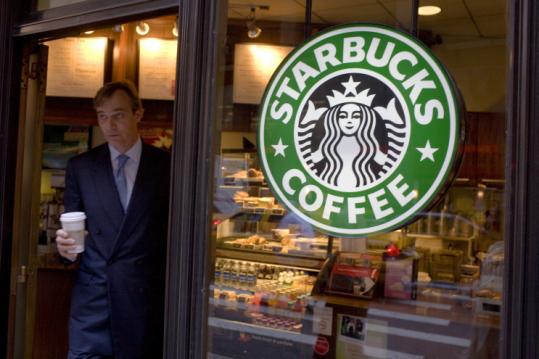
Starbucks Hikes Prices, Customers Take a Hike?


In the midst of a nasty recession, will customers want to pay more for their daily cuppa joe? Starbucks (Nasdaq: SBUX) may soon find out.


In some markets, the java giant is adjusting prices on what it calls "more complex" beverages. Some venti-sized fancy drinks will cost as much as a quarter more than they used to, but other drinks will decline in price by an average of $0.05 to $0.15.


Starbucks heralded these price changes back in April, and it's hardly clueless about the possible impact. In a memo to baristas, the company warned that its employees should "expect customers to be sensitive to pricing changes in this economic climate." In response, the chain apparently encourages baristas tell customers that the coffee giant is looking for ways to provide value. I'm not sure customers who are paying a quarter more will buy that line of thinking, but those paying a bit less just might.


Hiking prices could make sense if Starbucks wants to reestablish its credibility as a premium coffee purveyor. I could hardly complain about that, given my previous concerns that some of the company's "value" initiatives might tarnish its brand. Still, miffed customers could turn to many alternatives, including Peet's (Nasdaq: PEET), Caribou, and Green Mountain Coffee Roasters (Nasdaq: GMCR). And nobody underestimates the power of lower-end competition like McDonald's (NYSE: MCD) or Dunkin' Donuts, either.


Nor should we forget Starbucks' diminished traffic. Companies like Chipotle (NYSE: CMG) (NYSE: CMG-B) and Panera Bread (Nasdaq: PNRA) have successfully raised menu prices to offset flagging customer visits, but that's a dangerous game to play. Given its current precarious position, I have to wonder whether Starbucks should have left well enough alone.

Stocks touch new '09 highs


Stocks gained Tuesday, extending a recent rally, after reports showed that consumer confidence and home prices are starting to recover.


News that President Obama is nominating Federal Reserve chief Ben Bernanke for a second term in office added to the positive sentiment.


The Dow Jones industrial average (INDU) added 30 points, or 0.3%, according to early tallies. The S&P 500 (SPX) index gained 2 points, or 0.2%. The Nasdaq composite (COMP) rose 6 points, or 0.3%.


Stocks slipped Monday as investors took a step back after pushing the major gauges to new 2009 highs Friday. But after Monday's brief hiccup, stocks resumed their advance Tuesday.
Stock gains were pretty broad based, with 21 of 30 Dow stocks rising, led by Boeing (BA, Fortune 500), JPMorgan Chase (JPM, Fortune 500), United Technologies (UTX, Fortune 500) and Travelers Companies (TRV, Fortune 500).


But falling oil prices cut into any stock gains, dragging down the influential energy sector. Dow components Exxon Mobil (XOM, Fortune 500) and Chevron (CVX, Fortune 500) declined and the Amex Oil (XOI) index was off 1%.


Since bottoming at a 12-1/2 year low on March 9, the S&P 500 is up 52% as of Tuesday afternoon. The pace and breadth of the run up has left many Wall Streeters calling for a big selloff in September and October. But so far, there has been no indication of that.


"Generally, the market keeps moving higher even though so-called experts are saying it's overbought," said Terry Morris, senior equity manager, National Penn Investors Trust. "It's surprisingly strong. Maybe we have turned a corner."


Consumer confidence: Stocks hit the highs of the day just after the 10 a.m. ET release of the August Consumer Confidence index. The index rose to 54.1, surprising economists who thought it would rise to 47.9. The index stood at a revised 47.4 in July.


While the report was significant, it doesn't often correlate to what the consumer ends up doing, said Kim Caughey, senior equity analyst at Fort Pitt Capital Group.


"Unemployment is continuing to rise, and that's going to keep the consumer out for the time being," Caughey said. She said inventory rebuilding on the part of corporations will help support the economy in the short term, rather than a rise in consumer spending.
She said the Bernanke announcement was more notable.


Fed: President Obama nominated Ben Bernanke to chair the Federal Reserve for a second term, announcing the reappointment months ahead of the expiration of Bernanke's current term.
The reappointment is expected to receive the approval of the Senate.


"There was a bit of uncertainty around Bernanke's reappointment and the fact that the announcement was made today is driving the gains," Caughey said.


Housing: Home prices rose 2.9% in the second-quarter versus the first quarter, according to an S&P/Case-Shiller report. That's the first quarterly rise in prices in three years and could signal that the housing market has bottomed.


The 20-city index declined 15.4% in June versus a year ago, but that was shy of forecasts for a drop of 16.4% versus a year ago.


Budget: The White House released its deficit and economic forecast. It predicts a federal budget deficit of $9 trillion over the next decade and a deficit of $1.58 trillion in 2009. The $9 trillion is $2 trillion more than what the administration had forecast previously.


The Congressional Budget Office (CBO) released its own forecast shortly after the Obama administration. The CBO said the 2009 deficit will total $1.6 trillion.


World markets: European markets rallied, while Asian markets slid, with the Japanese Nikkei losing 0.7%.


Bonds: Treasury prices inched higher, lowering the corresponding yields.


Oil: U.S. light crude oil for October delivery fell $2.32 to settle at $72.05 a barrel on the New York Mercantile Exchange, after touching a new 10-month high in the morning.


response to the first of three government debt auctions this week. The rise in prices lowered the yield on the benchmark 10-year note to 3.44% from 3.47% Friday. Treasury prices and yields move in opposite directions.


Treasury sold $42 billion of 2-year notes Tuesday and is planning to sell $39 billion of five-year notes Wednesday and $28 billion of 7-year notes Thursday.
Other markets: COMEX gold for December delivery rose $2.30 to settle at $946 an ounce.
In currency trading, the dollar fell versus the euro and the Japanese yen.


Market breadth was positive. On the New York Stock Exchange, winners topped losers three to two on volume of 890 million shares. On the Nasdaq, advancers beat decliners seven to six on volume of 1.65 billion shares.

Friday, February 8, 2008

Friday Market slips at open

Stocks opened lower on Friday after a Federal Reserve official said a recession might not be avoidable and fresh concerns arose about the outlook for bond insurers.

The Dow Jones industrial average (DJI:^DJI - News) was down 39.10 points, or 0.32 percent, at 12,207.90. The Standard & Poor's 500 Index (^SPX - News) was down 5.16 points, or 0.39 percent, at 1,331.75. The Nasdaq Composite Index (Nasdaq:^IXIC - News) was down 3.29 points, or 0.14 percent, at 2,289.74.

This Is a Report By Tarek El Hewehi.

Thursday, February 7, 2008

Stocks Finish Higher After Fitful Day

Wall Street finished moderately higher in fitful trading Thursday as investors, still nervous about the economy, decided to buy back into a stock market pummeled by three straight days of losses.

With the market having largely priced in the possibility of a recession, many believe there are plenty of valuable stocks at cheap prices. Before Thursday, the Dow Jones industrial average had fallen this week by 543 points, or 4.26 percent, giving up all of last week's sharp gains.
Though the market ended up rising Thursday, trading was extremely fickle due to a batch of gloomy data that included declining January sales at major retailers, a drop in December sales of pending homes, and a disappointing outlook from Internet networking supplier Cisco Systems Inc. The major indexes seesawed throughout the day.

"We're kind of trying to create a silk purse out of a sow's ear here," said Hugh Johnson, chief investment officer of Johnson Illington Advisors. "The earnings are lousy, the economic numbers are lousy."

The Dow rose 46.90, or 0.38 percent, to 12,247.00 after trading down about 80 points and up about 130. The index remains more than 13 percent below its record close on Oct. 9, 2007 of 14,164.53.

Broader stock indicators also recovered some ground. The Standard & Poor's 500 index rose 10.46, or 0.79 percent, to 1,336.91. The technology-heavy Nasdaq composite index rose 14.28, or 0.63 percent, to 2,293.03.

Government bonds fell. The 10-year Treasury note's yield, which moves opposite its price, rose to 3.76 percent from 3.60 percent late Wednesday.

Investors may have been encouraged to buy back into stocks due to a rise in the dollar, whose decline over the past several months has contributed to worries about inflation and a possible drop in foreign interest in U.S. investments.

Peter Cardillo, chief market economist at Avalon Partners, said the dollar's advance followed remarks by European Central Bank chief Jean-Claude Trichet that the United States and Europe remain economically intertwined. This suggested to investors that strength in other countries can help stabilize the United States during its rough patch. Fears of a global economic slowdown have been weighing on stocks around the world.

As expected on Thursday, the Bank of England lowered its key interest rate by a quarter percentage point to 5.25 percent, its second cut in three months, while the European Central Bank left its key rate unchanged at 4 percent.

Another argument for bargain hunting Thursday was that the recent spate of negative economic data raises the likelihood of the Federal Reserve lowering interest rates again to spur growth. Atlanta Fed President Dennis Lockhart said Thursday the Fed's "focus, religiously, is on the general economy, the real economy."

Moreover, the stock market often portends economic declines, rather than the other way around.

"Stocks do worse during times of slow growth than they do during recession," said Brian Gendreau, investment strategist for ING Investment Management. "If we're in a shallow and short recession, for all anyone knows, we might be halfway through."

The market's indecisive movements throughout the day show, however, that it has not moved past the many worries swirling about personal spending, the crumpling housing market and deteriorating conditions in consumer credit.

Late Wednesday, Internet networking supplier Cisco Systems Inc. issued a 10 percent sales growth forecast for its current quarter that fell well below the 15 percent Wall Street projected. But Cisco finished up 30 cents at $23.38, after some investors saw the stock was undervalued.
And in a counterintuitive move, retail stocks -- also regarded as cheap right now -- rose even after the nation's retailers logged their worst January in about 40 years. Wal-Mart Stores Inc. reported a 0.5 percent rise in January same-store sales, or sales at stores open for at least a year, while Target Corp., Gap Inc., Limited Brands Inc. and AnnTaylor Stores Corp. each said their sales fell.

Not all news about retailing was bad -- J.C. Penney Co. raised its earnings forecast for the last three months of 2007. Its stock jumped $3.72, or 8.5 percent, to $47.44.

But on top of the mostly weak retail reports, the Labor Department reported that jobless claims fell last week by 22,000, a smaller decline than many economists predicted, and the National Association of Realtors said pending sales of existing homes fell 1.5 percent in December.

Light, sweet crude oil rose 97 cents to settle at $88.11 a barrel on the New York Mercantile Exchange. Gold prices also climbed.

Oil prices had been gradually declining, so it's possible a slower economy is keeping inflation from accelerating. Still, many market participants are anxious about how much longer the Fed can continue to lower interest rates given relatively high food and energy costs.

The Russell 2000 index of smaller companies rose 10.29, or 1.49 percent, to 702.78.
Advancing issues outnumbered declining shares by nearly 2 to 1 on the New York Stock Exchange, where consolidated volume came to 4.44 billion shares, down from 3.89 billion on Wednesday.

Overseas, many Asian markets were closed for a holiday, but Japan's stock market was open and its Nikkei average rose 0.82 percent. In Europe, Britain's FTSE 100 fell 2.58 percent, Germany's DAX index fell 1.66 percent, and France's CAC-40 fell 1.92 percent.

Wednesday, January 23, 2008

Toyota Falls Short of GM in Global Sales Thursday January 24, 1:26 am ET

Toyota Still No. 2 After Falling About 3,000 Vehicles Short of GM in Global Vehicle Sales

TOKYO -- General Motors, a symbol of American industrial might and the world's top seller of motor vehicles since Herbert Hoover was president, has been all-but-overtaken by a foreign rival.

Toyota said Thursday it sold 9.366 million vehicles last year globally, about 3,000 vehicles fewer than the tally from General Motors Corp., just barely allowing the U.S. automaker to retain its crown as the world's No. 1 automaker.

All year long, the two automakers raced neck-and-neck in global sales, highlighting Toyota's phenomenal growth and the struggles facing GM and other American automakers.

Toyota had said as late as Wednesday that its annual total was 9.37 million vehicles, up 6 percent from 2006. GM said Wednesday in Detroit its global sales had risen 3 percent to 9,369,524 vehicles, making for a race that appeared too close to call.

But Toyota Motor Corp. spokesman Paul Nolasco in Tokyo confirmed the extra digit in Toyota's sales Thursday, showing that GM's total was narrowly higher. GM has been the world's top seller for 77 years.

Toyota executives have repeatedly expressed worries about a possible backlash if they dethrone GM, an American icon. The Japanese automaker has been setting up more plants in North America and has tried to show it's a good U.S. corporate citizen.

Nolasco refused to comment on GM's retention of the No. 1 title. But he said Toyota sees sales growth as a reflection of how people recognize its products "We would like to become No. 1 in quality in product offerings and services, carefully making good products, and give true happiness to our customers," he said.

In Detroit, GM wasn't gloating. The company's global strategy hasn't changed, said company spokesman John McDonald. "We're not as concerned about who's winning," he said. "We're just really focused on what we need to do to have a growing business, getting our business right in North America."

Overall, GM's worldwide sales in 2007 were the second-best in its 100-year history

It's biggest sales growth has come outside the U.S. It set a sales record in China by selling more than a million vehicles, set a record in Brazil with nearly 500,000 and doubled sales in Russia.
Still, GM has struggled in recent years with job cuts, earning losses and plant closures.

Toyota has seized the lead in ecological hybrids with its hit Prius, which runs on a gas engine and electric motor, selling more hybrids than any other automaker. And that edge came at a good time when consumers were looking for good mileage amid soaring gas prices.

Earlier this month, Toyota deposed Ford Motor Co. as the No. 2 auto seller in the U.S. for 2007. Toyota sold 2.6 million vehicles in the U.S. for a 16 percent share of the market -- and more than double from what it sold in 1990.

GM, third on the Fortune 500 list of U.S. corporations, remains the auto sales leader in the U.S. But its market share has dropped dramatically from about 35 percent in 1990 to about 24 percent in 2007. GM sold 3.8 million vehicles in the United States last year.

Aaron Bragman, an analyst with the consulting firm Global Insight, said GM and Toyota have expanded almost evenly in most emerging global markets, but GM has been hurt by sales declines in North America. "A lot of that volume reduction has come here," Bragman said. "They did very well in every other market except North America."

He said much of GM's U.S. sales decline comes as the company has intentionally cut incentives and reduced low-profit sales to rental car companies. GM's U.S. sales last year were down 6 percent from 2006, due largely to a reduction in fleet sales -- those to large, bulk buyers.
"If they had kept that fleet volume up, it wouldn't even be a competition," Bragman said.

Still, it was in new markets such as China that GM still led Toyota, managing to come out ahead for the time being. And the competition in such markets is likely to determine the winner in the long run.

While more mature auto markets, such as the U.S. and Japan, are stagnating, China and India are booming. Toyota, which is aggressively expanding overseas production, is forecasting robust growth for this year at selling 9.85 million vehicles, up 5 percent from this year.
GM does not give comparable sales forecasts.

In a typical comment for a Toyota executive, Shoichiro Toyoda, a member of the founding family and former president, told The Associated Press earlier this month that gaining the top spot in the auto industry could be fleeting. "We are not No. 1," he said. "We need to just keep working harder."

General Motors Corp.: http://www.gm.com

Toyota Motor Corp. http://www.toyota.com